The Largest Online Community for Contact Centre Professionals


The Largest Online Community for Contact Centre Professionals
 Close
Close




Published On: 22nd Jan 2026 09:30 - Modified: 5th Jan 2026
Celia Cerdeira at Talkdesk explores how AI knowledge management works and the benefits it brings to modern customer experience teams.
AI knowledge management gives organizations the accuracy, speed, and consistency needed to deliver personalized support at scale.
Customer experience automation (CXA) makes automation simple, scalable, and secure without sacrificing quality.
AI knowledge management is a core building block of CXA, enabling instant access to accurate answers for both agents and customers.
As a result, the combination of structured knowledge and intelligent automation strengthens the entire customer journey.
Knowledge management is the process of creating, organizing, and delivering information so agents and customers can find it quickly. It ensures internal teams and self-service tools all work from the same reliable source of truth.
However, traditional knowledge management alone is no longer enough for customer service. High interaction volumes, complex customer needs, and rapidly changing products make static, manual systems difficult to maintain.
Information becomes outdated, search becomes slow, and people struggle to find what they need. These challenges limit an organization’s ability to scale support while maintaining quality.
AI-powered knowledge management enhances traditional knowledge practices with intelligence that understands language, anticipates intent, organizes content automatically, and retrieves information with far greater accuracy.
Instead of relying on manual updates or keyword searches, AI knowledge management interprets questions in natural language, identifies the most relevant answer, and delivers it instantly, no matter how the question is phrased.
AI knowledge management solutions typically include these key technologies that work together to improve speed and scalability:
Knowledge creation is the process of generating new, accurate, and easy-to-use information that expands a company’s knowledge base. It ensures the system evolves alongside changing products, policies, and customer needs.
In contact centres, knowledge creation is essential because customer conversations often reveal gaps—issues that aren’t documented yet but appear repeatedly in real interactions.
When these gaps go unaddressed, agents spend more time searching, resolutions slow down, and customers receive inconsistent experiences.
AI-powered knowledge creation addresses these challenges by analysing conversation data, identifying missing information, and generating clear, reliable answers that can be validated and added to the knowledge base.
Customer expectations are higher than ever, and contact centres now operate across more channels, products, and use cases. Teams need a knowledge system that can keep up with this level of complexity and change.
AI knowledge management supports these demands in several essential ways:
AI knowledge management is the backbone of customer experience automation, ensuring every automated or human-assisted interaction is supported by accurate information.
AI knowledge management works through a combination of automated knowledge creation, intelligent retrieval, and a unified platform that delivers accurate answers across every channel.
One of the most persistent challenges in customer service is keeping knowledge accurate, complete, and relevant.
Traditional knowledge management relies heavily on manual processes, agents need to flag missing information, subject matter experts have to draft new content, and teams must review and publish updates.
This approach often leaves gaps undiscovered until an agent struggles to find an answer during a live interaction.
AI knowledge management solutions address this problem by analyzing real conversations, identifying recurring questions without documented answers, and generating high-quality content to close those gaps.
These systems turn unstructured data, such as transcripts, chat logs, and agent notes, into clear, approved answers that strengthen the entire knowledge base.
This shift eliminates bottlenecks, reduces the burden on frontline teams, and ensures customers receive accurate guidance even as products, policies, and edge cases change.
Even the strongest knowledge base is only effective if the right information can be surfaced at the right moment.
AI knowledge management solutions address this need through precise retrieval systems that understand context, interpret intent, and instantly deliver the most relevant answer.
Instead of presenting long articles or broad content sets, these systems narrow results to the specific details required for the customer’s question or the agent’s workflow.
Context-aware retrieval is especially valuable for organizations with tiered programs, specialized policies, or complex service exceptions.
AI can evaluate factors such as customer profile, queue type, conversation history, and routing logic to determine which information applies and which does not.
This eliminates the need for agents to sift through dense documents, reduces errors, and ensures that self-service channels deliver accurate, personalized guidance.
AI-powered knowledge management reaches its full potential only when supported by a broader customer experience automation (CXA) ecosystem.
Multi-agent orchestration unifies knowledge creation, retrieval, and delivery so that AI agents, automated processes, and AI copilot tools all draw from the same trusted information source.
When knowledge is up to date and easily accessible, CXA can help virtual and human agents resolve issues faster and deliver more streamlined customer experiences.
AI knowledge management has an array of standout capabilities that help contact centre agents deliver faster, more consistent support.
Permission controls ensure that everyone—employees, support teams, and AI agents—has access to the right information at the right time.
These controls define who can view, edit, or publish content, helping organizations protect sensitive information while still making essential knowledge easy to find.
Clear roles and permissions keep the knowledge base organized, trusted, and aligned with compliance needs.
Answer cards are concise, structured knowledge assets designed to deliver direct responses to specific questions.
Instead of long articles that require agents to scan for the right information, answer cards surface the exact guidance needed for a given issue.
They can include short explanations, steps, variations, or related details making them easy for both human agents and AI agents to understand and use in real time.
These cards play a central role in powering conversational AI. They are tagged, organized, and aligned to intents, channels, and ring groups allowing AI systems to match a customer’s question with the most relevant answer.
When knowledge management can connect seamlessly with other CXA tools, every touchpoint can deliver the right answer without delay.
These integrations ensure that both virtual agents and human agents can access trusted knowledge within the tools they already use.
Self-service AI can resolve more inquiries on its own, human agents can receive real-time guidance, and automated workflows can trigger actions based on the information retrieved.
With knowledge flowing freely across the CXA environment, organizations can offer faster, more consistent support wherever customers choose to engage.
FAQ upload capabilities make it easy for teams to turn existing resources into usable, structured knowledge.
Instead of manually recreating content, users can upload FAQ files directly into the AI knowledge management system, where the information is automatically analysed and converted into answer cards. This accelerates knowledge creation and reduces the burden on subject matter experts.
These uploads help keep the knowledge base current and comprehensive. Human agents can quickly contribute new insights, refine responses, or add missing details based on real customer interactions.
Knowledge base connectors allow AI knowledge management systems to pull information from multiple external platforms into a single, unified source of truth. Instead of forcing teams to manage separate knowledge repositories, connectors aggregate articles, FAQs, and documentation from third-party tools and make them accessible through one centralized interface.
This consolidation simplifies search, reduces duplication, and ensures agents and AI systems can access the full range of organizational knowledge quickly.
AI knowledge management delivers a wide range of benefits that improve customer experience and enhance internal performance, including:
Implementing AI-driven knowledge management is a straightforward process when approached in clear, structured steps.
Identify organizational expectations for an AI-powered knowledge management solution. Teams should assess current pain points, such as outdated content, slow search, or inconsistent answers, and determine which capabilities (like automated content creation, intelligent retrieval, or analytics) are most important.
A clear understanding of priorities helps ensure the chosen system aligns with business goals and supports the customer experience strategy.
Before implementing AI, companies should gather the information that will populate the knowledge base. This often includes content from internal documents, FAQs, product manuals, CRM notes, conversation transcripts, chat logs, and third-party knowledge systems.
Preparing these sources for integration ensures the AI has access to complete, high-quality data, enabling it to generate accurate answers and identify gaps.
Once the knowledge base is ready, organizations should connect it to the systems that power customer interactions, including their CRM, ticketing platform, self-service channels, and agent-assist tools.
These integrations allow AI to access customer context and deliver precise, timely answers where they’re needed most.
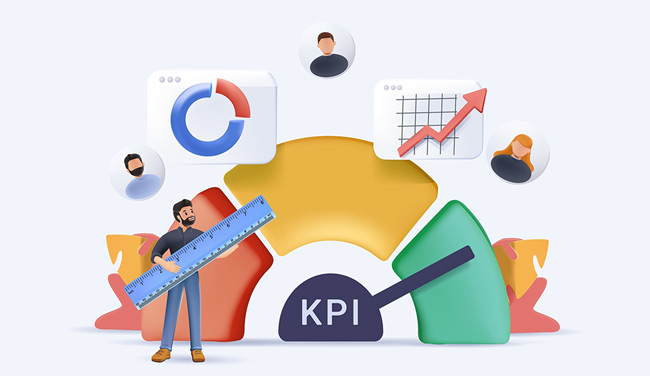
After deployment, organizations should regularly track key performance indicators (KPIs) such as first contact resolution (FCR), average handle time (AHT), and customer satisfaction (CSAT) to evaluate how well the system is performing.
Monitoring these metrics helps teams understand which knowledge is working, where gaps still exist, and how AI is influencing customer outcomes.
Continuous measurement keeps the knowledge environment accurate, relevant, and aligned with evolving needs.
This post has been re-published by kind permission of Talkdesk - view the original article.

Talkdesk is a global customer experience leader for customer-obsessed companies. Our contact center solution provides a better way for businesses and customers to engage with one another.
Find out more about TalkdeskReviewed by: Robyn Coppell

The Latest Customer Contact Research, Reports and White Papers straight to your inbox!
Get the latest insights from Call Centre Helper by signing up for our email content.
Close


14th October 2026
18th October 2026