The Largest Online Community for Contact Centre Professionals


The Largest Online Community for Contact Centre Professionals
 Close
Close


Published On: 9th Jan 2026 07:30
In today’s contact centres, leaders are under increasing pressure to create environments where advisors feel supported, empowered, and motivated to deliver great customer experiences.
In Dropping the C-Bomb, Elev-8 Performance explores why team climate often collapses long before culture does, and how leaders can reverse that trend.
In a recent conversation with Call Centre Helper Editor Megan Jones, Miranda Cain, Managing Director at Elev-8 Performance, shed light on two powerful concepts from the book.
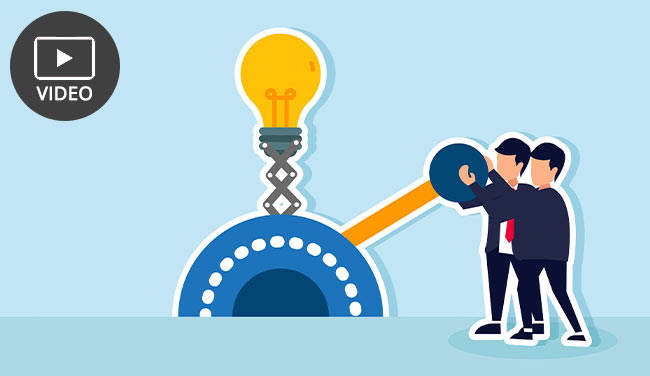
Watch the video below to hear Miranda give advice on applying practical levers to boost performance:
With thanks to Miranda Cain, Managing Director at Elev-8 Performance, for contributing to this video.
This video was originally published in our article ‘What Great Leaders Know About Team Climate and Results’
During the conversation Megan and Miranda discussed the concepts of accountable freedom and illuminate awesome.
Both ideas challenge traditional leadership habits and offer a more empowering, balanced approach to helping advisors perform at their best.
Many organizations say they want advisors to “do the right thing for the customer”, even when that means stepping beyond rigid processes, as Miranda explains:
“Often you know organizations talk about putting the customer at the heart of the business and wanting to do right by the customer.
And a big ask is to get to a place where advisors feel able to make the right decision for a customer, even if that means stepping slightly outside of process. And essentially the call is to empower teams to be able to do the right thing. You often hear people talking about the need therefore for autonomy, and we draw a bit of a distinction between autonomy and we call it accountable freedom.”
But genuine empowerment requires more than autonomy, it requires accountable freedom.
Accountable freedom means advisors understand:
It’s not about letting everyone decide whatever they want, it’s about equipping people to make sound, rounded decisions in complex, variable customer scenarios.
“And really the difference is that there needs to be a real understanding of the impact of the decision I might make.
So, whilst if I’m going to make a decision I believe is the right thing for the customer, I need to understand when it’s the right decision to step outside of process and when it isn’t.
And actually if I make the wrong decision, what are the implications both for the customer, for myself and for the organization?
And so it requires a greater investment. It isn’t about simply letting everybody make whatever decision they feel like making, and you can imagine that could be fraught with risk, but how we develop people so they have the ability to make the more rounded decisions and make the best decision in the moment for customer and business. And it’s a difficult one because every customer scenario will be different.
So, it isn’t as black and white, and it isn’t always saying right, so in every case you would make this decision. But it’s how you develop your people to be able to make those decisions in the moment based on what is presented to them at the time.”
To get there, leaders must invest in developing judgement, commercial awareness, confidence, and the ability to balance risk with customer outcomes.
Many advisors experience a performance culture focused heavily on what’s missing, what needs to improve, what fell short, what didn’t meet the standard, as Miranda continued:
“Often when we do work with organizations and we’re talking to advisors, often the general sense we get is it can feel quite deficit focused. There’s a lot of conversations about what’s not quite where it needs to be.
And in fact, we were working with an organization where the stats were if they had somebody go on to a performance improvement plan, 90% plus were never able to get off of that plan, so ultimately ended up exiting the business.
And it points to there being a real focus on just lasering in on the things that aren’t right, and that obviously can really affect an individual who’s trying to do things differently.
When we talk about illuminate awesome, essentially it’s about shining a light on the things you want to see more of. So, it’s that positive reinforcement.”
In some organizations, this deficit-based environment becomes so skewed that advisors placed on performance improvement plans rarely recover, eroding morale and psychological safety.
“And if you talk to people and ask about the conversations they maybe have with their team leader or their line manager, more often than not, it’s about the improvements they need to make and the things that have fallen short of expectation.
And what we’re encouraging people to do is invest as much time and effort in congratulating people on a job well done. And often people might do 90% of what’s asked, but we’ll focus on the 10% that wasn’t right.
We’re trying to address that balance. So, let’s really focus on shining a light on the stuff like that and amplifying the things that we want to see more of.”
Illuminate awesome flips this dynamic by placing equal (or greater) emphasis on recognizing great work, which means:
This approach boosts motivation, strengthens trust, and encourages people to take the risks required for innovation and improvement, as Miranda explains:
“I think from a mindset perspective, it’s very difficult as an individual if it feels like whatever I do, you’re going to find the one thing that wasn’t right. It doesn’t take long before I’m going to lose a level of motivation and ultimately engagement.
But also, if we think about, you know, more strategically, we look at businesses now really focused on innovation. I’ve got to innovate. I’ve got to be prepared to do stuff that hasn’t been done before and take some risks.
And with risk comes a higher chance of failure, and so I’ve got to feel safe that if I do something and it doesn’t work out, we will see that as a teachable moment and an opportunity for development, rather than just focusing on the outcome and not everything that led to it, you know, my intent and my aim to bring about a great outcome.
I think making sure that also we balance if I work with you and I spend as much time telling you what a great job you’re doing, on a day where I do need to have a conversation about something that falls short, you will be much more receptive, because I’m then seen as someone who brings balance in terms of that sort of interactions that we have.
So you know I’ve got your back because I call out the great stuff, so when I come to you with an area of development, you’ll be much more receptive to that at that time.”
Teams led with accountable freedom and a focus on illuminating strengths show clear, visible differences:
When people feel recognized and trusted, they willingly go the extra mile, whether that’s staying late to support colleagues or stepping in during busy periods.
“So really significantly, things like discretionary effort. So you know, everybody’s time poor, everybody’s under-resourced.
And when you’ve got people that say, look, you know, I can put in the extra mile. One, it will be appreciated. So that often feels like that’s missing, so that acknowledgement and appreciation.
But also it’s part of my development, so I’m more likely to offer to go that extra mile to stay for an extra 30 minutes to help out where we’ve got a shortfall and so on. So as a team lead or a manager, I’m going to benefit from having a team that’s going to contribute more.”
Advisors take on new tasks, stretch themselves, and build capability because they know mistakes are treated as teachable moments, not punishable failures.
“I think in terms of the personal growth within the team as well, where people are prepared to take on things that they perhaps haven’t done before.”
A balanced climate creates a culture of “we’re in this together”, where teams feel supported, appreciated, and energized.
Because advisors feel safe and encouraged to grow, leaders have a healthier pipeline of people prepared to step into new roles or responsibilities.
“So from a succession planning, but also just from a connection within the team, and that real sense of it’s us against the world and we’re in this together. That definitely comes where people feel that their hard work is really noticed and acknowledged.”
Accountable freedom and illuminate awesome aren’t just concepts, they’re practical, human leadership habits that shape the day-to-day climate advisors experience.
When leaders embrace both, they reduce fear, increase confidence, and create a team environment where people can truly thrive.
If you are looking for more great insights from the experts, check out these next:

Robyn Coppell has worked as Digital Content Manager for Call Center Helper since 2021. After University her first job was in a contact centre and has stayed in this space ever since.
She has experience of contact centre operational management, software systems, css and php coding. She edits a lot of the guest content that is published on Call Centre Helper.
Connect with Robyn on LinkedIn
Read more by Robyn Coppell

The Latest Customer Contact Research, Reports and White Papers straight to your inbox!
Get the latest insights from Call Centre Helper by signing up for our email content.
Close


13th October 2026
14th October 2026


