The Largest Online Community for Contact Centre Professionals


The Largest Online Community for Contact Centre Professionals
 Close
Close



Published On: 17th Dec 2025 08:00 - Modified: 8th Jul 2026
Struggling to maintain positive relationships between your QA and frontline teams? Don’t lose hope! There’s plenty you can do to turn the situation around!
That’s why we spoke to experienced contact centre leaders Clare Santos and Nerys Corfield to find out what steps you can take to create all-round better working relationships.
One of the key areas where you can quickly and easily build some positive momentum is to reposition QA in your contact centre onboarding process, investing additional time with your new recruits from day one to get relationships off to the best possible start.
“What’s really critical during your onboarding and training is that new recruits really understand the scorecards and what you’re trying to achieve with quality.
It can also help here to give them the chance to score their own and one another’s calls, as well as give their opinion on what they think of the current scorecard questions.” – Nerys Corfield, Director of Injection Consulting Limited
This really helps to nip any “watercooler gossip” in the bud, so negative perceptions aren’t in place before they are even introduced to the QA team and scoring process.
Over time, as more new starters join the contact centre, the benefit of this approach will start to spread into existing teams too.
For more advice to improve your onboarding process, read our article: 21 Top Tips to Improve Your Agent Onboarding
It’s not just about influencing new recruits either. You can also make some positive headway by changing the way QA teams talk about the scoring process.
Sadly, contact centres can quickly slip into a culture where the frontline feel that QA are “Big Brother” and only out to look for mistakes – when the truth is that the QA team are there to measure the consistency of the customer service delivered and make sure everyone is meeting regulatory requirements (and avoiding fines!).
Language can play a big part in fanning the flames here – but it can also play a part in turning things around.

“To build better relationships between QA and the frontline, you really need to remove some of the negative wording around it.
One of my pet peeves is someone in QA saying, “I dinged him because he didn’t do X, Y, Z”. But you need to change that vocabulary! Too often, the QA team mindset is to start at 100% and deduct from there.
When it’s actually a far better narrative to start at zero and for agents to receive good marks as they get ever closer to 100%.
This reframing can lead to far more positive conversations around “Well done for doing X, Y, Z” instead of “I marked you down for not doing X, Y, Z”. – Clare Santos, Director, Knowledge & Quality, Customer Experience at Aviso
If you are looking for advice to enhance internal communication, read our article: 7 Clever Ways to Improve Internal Communication Between Departments
If things are really bad, you could even consider a full rebrand – changing everything from your scorecards to how you refer to the programme.
For some, this opportunity will come naturally by inheriting a new team or starting a new role where there’s not much in place to start with. However, for others, it will be part of a big but necessary overhaul to better align QA and the frontline for the long haul.
Although a lot of work, it can be a really good way to take existing teams on a fresh journey and really help to build positive working relationships that align everyone in the vision and purpose of the contact centre.
Don’t underestimate the value of a new, fun name for your QA programme either.
“Even if you don’t have time for a full rebrand, a new name can make so much difference to the positioning of the work the QA team do.
We’ve had some fun names in the past, like CSI, which stood for “Customer Satisfaction Investigators” – which helped to emphasize what we were there to achieve.
It’s a small but significant part of the puzzle that can really help people think about the work in a different and more positive way.”– Clare Santos, Director, Knowledge & Quality, Customer Experience at Aviso
It can also help to regularly bring representatives from the frontline and QA teams together when key decisions need to be made – particularly around changes to scorecard questions.
This extends to having regular calibration sessions to make sure that everyone is on the same page and that QA is being managed fairly across the contact centre – especially where QA scores are linked to bonuses and conversations can become heated if an agent feels they’re unfairly marked down.
Frequency is key here too! An annual calibration session or scorecard review isn’t going to be much use to anyone in the long run. Little and often is a far better approach to keeping the lines of communication as open as possible and reducing the risk of miscommunication.
Unfortunately, there’s a lot of inconsistency out there right now, as our latest ‘CCH Benchmark Report: What’s Happening With Customer Contact in 2025?’ report shows:
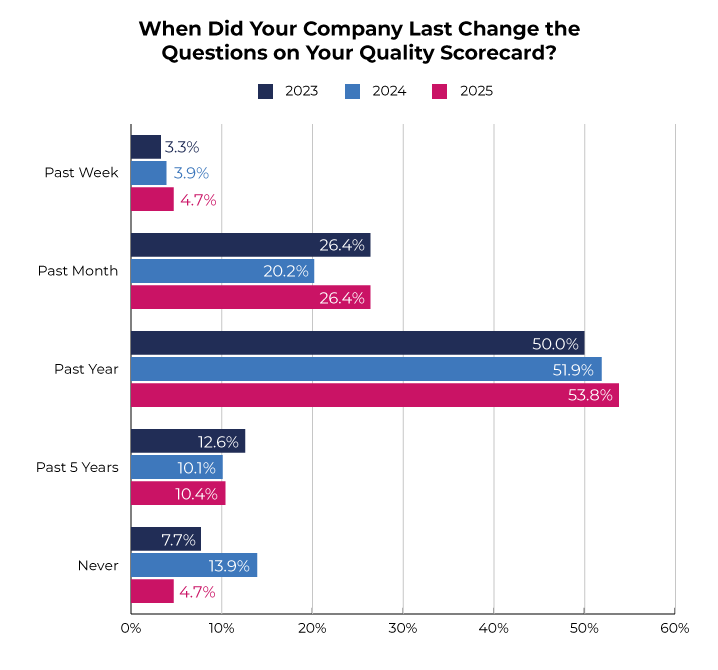
So, if you genuinely can’t remember the last time you reviewed your scorecards, it’s high time to get a session in the diary!
After all, if you’re not making time to address potential issues with your scorecards, you could be leaving problems to fester – and that’s really not going to help the QA/frontline dynamic, is it?
And finally, don’t ignore the role of AI in the future of your QA programme.

“Auto QM is really shaking things up right now, but it’s important to strike the right balance.
Of course, the AI can do a great job of surfacing the calls worthy of praise and also those in need of improvement, but it still should be seen as a foundation and a tool to be overlaid with common sense and the human touch of the QA team.
So, if you are deploying AI tools, tread very carefully and invest time in making sure your advisors understand the new mechanisms and the oversight in place to make sure things remain fair. Success is all about transparency!” – Nerys Corfield, Director of Injection Consulting Limited
The good news is that there are plenty of ways to build stronger relationships between QA and the frontline – and some of the initiatives are as small and simple as changing some of the language around how you talk about the agent scoring.
Whichever approach you take, remember it can take several months to turn the tide on old habits and address any ill-feeling – but you’ve got to start somewhere, haven’t you?
Click here to join our NEW Readers Panel to share your experiences and feature in future Call Centre Helper articles.
With thanks to the following people for sharing their thoughts for this article:
If you are interested in learning more about improving your contact centre QA and performance, check out our webinar: Best Practices in Performance and Quality Management
For more information on developing your QA programme, read these articles next:

Megan Jones, Editor, Call Centre Helper
Megan interviews inspiring people across the contact centre industry to capture these amazing voices and turn them into best practice articles – covering all elements of what it takes to deliver truly outstanding employee and customer experiences.
Connect with Megan on LinkedIn
Read more by Megan JonesReviewed by: Xander Freeman

The Latest Customer Contact Research, Reports and White Papers straight to your inbox!
Get the latest insights from Call Centre Helper by signing up for our email content.
Close


13th October 2026
14th October 2026


