
The Largest Online Community for Contact Centre Professionals


The Largest Online Community for Contact Centre Professionals
 Close
Close


Published On: 3rd Dec 2025 16:00 - Modified: 8th Dec 2025
The modern contact centre is undergoing a quiet but meaningful transformation. Long viewed as a cost centre built for volume and efficiency, it is now emerging as a space where employee engagement, empowerment, and operational excellence intersect.
That’s why we’ve drawn on our latest What Contact Centres Are Doing Right Now research into initiatives, engagement levels, and leadership effectiveness – to take a closer look at the evolving workplace dynamics and highlight practical steps for fostering a mature, people-first environment.
Most contact centres now offer a variety of initiatives aimed at empowering and engaging their workforce.
These initiatives are no longer optional extras – they have become central to operational strategy and retention – and extend to:
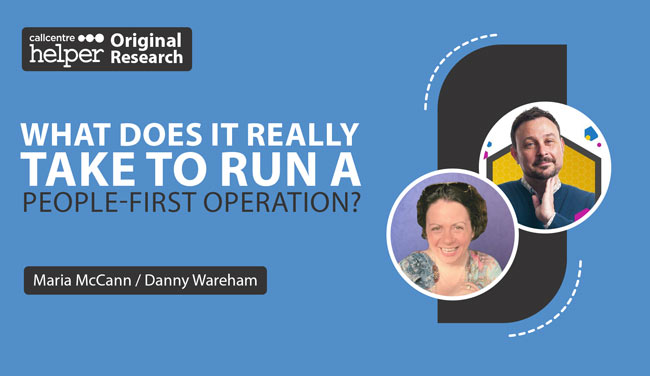
“For years, businesses have had a parent–child relationship with their contact centres. Strategy happened ‘upstairs’; execution ‘downstairs’. Different expectations. Different freedoms. That power imbalance shaped everything, including how the frontline served customers.
But the latest insights show a shift in that thinking. Investment in buddying, upskilling, flexible shifts and hybrid working suggest a maturing relationship. A move away from control and towards trust. From rigid oversight to operational partnership.” – Maria McCann, Co-Founder of Neos Wave
After all, true engagement and empowerment is systemic – embedded in decision-making frameworks, knowledge access, coaching, and the culture of trust. If agents are still required to seek approval to correct a broken process, or tell customers “I’d love to help, but I can’t”, the organization is not yet there.
The good news is that the 2025 survey data highlighted an overall improvement in engagement, reflecting the cumulative effect of these initiatives:
These figures indicate a slow but steady shift toward a more engaged workforce.
Not only this, but, encouragingly, contact centres appear to sit above average on the global trends for employee engagement.
“According to the latest Gallup State of the Global Workplace Report, employee engagement remains a significant challenge at 21%.
In the UK, just 10% of workers feel engaged in their jobs, ranking 33rd out of 38 European countries and at half the global average. Encouragingly, contact centres appear to buck this trend.
Why? Many factors influence engagement, including leadership approach, management practices and job design. For contact centre employees, one area with particular potential is autonomy. This is a core psychological need identified by Self-Determination Theory.
When people have the freedom to make choices about how they work, their engagement, wellbeing and performance tend to improve.” – Danny Wareham, Founder & Director of Firgun
And whilst initiatives and engagement levels are undoubtedly critical, without effective leadership, they can fail to deliver lasting impact.
Fortunately, our latest research revealed that a majority of professionals still have confidence in their managers’ ability to engage teams. However, confidence is waning, most likely due to increasing pressures on leaders and tighter budgets.
Financial constraints have forced many centres to restructure, reducing support roles or middle management positions.
The result? Leaders are typically managing larger teams, juggling multiple responsibilities, and facing reduced capacity to support their people effectively.
It’s a perfect storm, worsened by long-standing challenges across the industry, including the infamous “Magic Weekend”, where the leap from agent to team leader is often made with minimal preparation and results in new leaders relying solely on trial-and-error learning – creating inconsistency across the contact centre.
It’s just not good enough! Especially when effective leaders not only guide operational performance but also shape culture, employee morale, and retention.
Looking across initiatives, engagement, and leadership, therefore, a clear picture emerges: a mature, people-first contact centre requires alignment across all three dimensions:
This alignment is essential for operational performance and employee wellbeing. Without leadership capable of reinforcing initiatives, even the best engagement programmes can falter. Without meaningful initiatives, engagement and leadership are insufficient to sustain culture change.
Want to turn things around in your contact centre?
You don’t need to reinvent the wheel to foster a people-first contact centre workplace, just try out these next steps:
Clearly define decision-making scopes for agents, ensuring they can act independently while remaining accountable. Remove barriers to resolving customer issues and encourage problem-solving.
Embed autonomy in work design too! Offer self-rostering, flexible shifts, and choice in tasks wherever possible. Protect these freedoms even if office attendance policies change.
Invest in structured leadership programmes rather than relying on “Magic Weekend” transitions. Include coaching, mentoring, and scenario-based learning to equip leaders to engage effectively.
Develop buddying and mentoring programmes to facilitate knowledge sharing and emotional support, enhancing both engagement and operational resilience.
Where hybrid arrangements allow, create meaningful in-office interactions through social events, motivational games, and recognition programmes.
Regularly track engagement through pulse surveys and feedback mechanisms. Use insights to adjust initiatives and address emerging challenges proactively.
By focusing on these actions, you can begin to strengthen the link between people, performance, and customer experience – a critical differentiator in today’s competitive environment. Good luck!

Megan Jones, Editor, Call Centre Helper
Megan interviews inspiring people across the contact centre industry to capture these amazing voices and turn them into best practice articles – covering all elements of what it takes to deliver truly outstanding employee and customer experiences.
Connect with Megan on LinkedIn
Read more by Megan JonesReviewed by: Jo Robinson

The Latest Customer Contact Research, Reports and White Papers straight to your inbox!
Get the latest insights from Call Centre Helper by signing up for our email content.
Close



14th October 2026
18th October 2026


