
The Largest Online Community for Contact Centre Professionals


The Largest Online Community for Contact Centre Professionals
 Close
Close



Published On: 10th Dec 2025 16:00 - Modified: 11th Dec 2025
Managing a contact centre workforce is never straightforward. With unpredictable customer demand, unplanned absences, and varying agent adherence, the daily balancing act is stressful! So, it’s no real surprise that the default is to tie everyone up in ever-stricter rules and restrictions to try and get the best results.
Yet our 2025 Report: What Contact Centres Are Doing Right Now highlights a clear trend: contact centres that embrace flexibility are achieving better outcomes than those relying on rigid rules and punitive policies. Isn’t it time you were following suit?
One of the best examples of where rigid rules and punitive measures actually worsen the problem is with absence and lateness, which (unsurprisingly!) remain the top scheduling challenges right now.
So, what typically happens here? Sadly, for many, the default is to uphold a rigid attendance policy. Yet this is often counterproductive in contact centres – with strict point systems, automatic penalties, and inflexible rules damaging morale and engagement, creating a vicious cycle of absenteeism and lateness. Instead, a more flexible, human-centric approach can deliver better outcomes.
“Too many companies still run with “two or three infractions and you’re fired.” That system discourages people once they’ve hit a danger zone. A point-based approach can make it easier to manage attendance and keep people engaged.” – Dan Smitley, Founder of 2:Three Consulting
Start times and shift lengths that adjust to both demand and agent needs, alongside tools for self-service scheduling, can also empower staff while maintaining operational efficiency.
And there are lots of options out there for offering a more flexible choice of shift patterns, as our research shows:
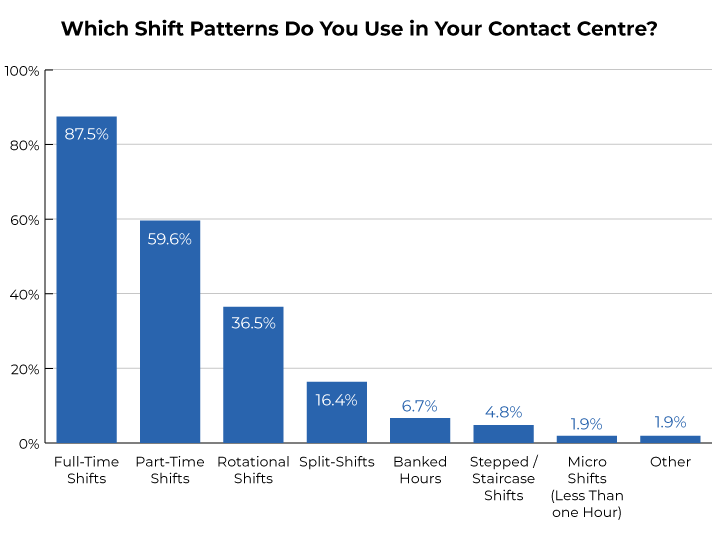
With so much potential for mixing full- and part-time shift patterns to improve the scheduling fit, flexibility is not a one-size-fits-all initiative.
Instead, it should be seen as an ever-evolving customizable suite of options tailored to your people, business goals, and customer expectations.
“When guided by a strategic vision and supported by a well-developed flexibility toolkit they become a powerful tool for shaping the future of work in your organization.
So, keep asking yourself “Are we still designing shifts around outdated constraints?” and “Have we truly explored the flexibility we could offer?”” – Phil Anderson, CEO of The Forum
Workforce management systems and AI-powered tools are making it easier than ever before to empower agents with flexibility. For example, through tools that allow staff to shift-swap, benefit from automated time-off approvals, and access schedules from their mobiles.
All of which has a direct impact on employee satisfaction and wellbeing by helping agents feel valued and trusted – ultimately reducing the friction that leads to absenteeism, lateness, and other common issues.
Quite simply, the most successful contact centres today are moving beyond rigid attendance rules and inflexible schedules toward a model built on trust, data, and empowerment.
So, if your contact centre is still relying on spreadsheets and rigid policies, now is the time to evolve.
Here are 5 practical next steps to help you start building a more flexible, future-ready strategy:
Map out how your shifts and attendance policies work today. Identify where rigidity creates bottlenecks or frustration – for planners and agents alike – and try to understand where flexibility would add the most value. This is a solid foundation for meaningful change.
Test options like micro-shifts, split shifts, or hybrid scheduling in a controlled environment.
Then be sure to use data to measure impacts on performance, adherence, and employee satisfaction before scaling up. Pilots help build confidence and evidence for wider adoption.
Invest in systems that allow agents to view and manage their schedules in real time – including shift-swaps, time-off requests, and bidding. Why? Empowerment reduces absenteeism and strengthens engagement by putting some control back in the hands of agents.
Did you know? Around one-third of contact centres still do not offer these tools, highlighting the disparity in workforce management maturity.
Reconsider the use of rigid, point-based systems or automatic penalties for absence and lateness. These often create fear and disengagement rather than accountability.
Instead, focus on understanding the root causes behind attendance issues – such as burnout, family pressures, or unrealistic shift patterns – and address them through coaching, wellbeing initiatives, or flexible scheduling. Over time, this builds trust, reduces turnover, and fosters a healthier, more resilient workforce.
Encourage open conversations about scheduling needs and constraints. Train leaders to focus on outcomes rather than presence and reinforce trust as a core management principle. After all, sustainable flexibility requires both the right tools and the right mindset.
In essence, the question isn’t whether flexibility beats rigid rules – it’s how fast you can adapt to make flexibility work for you.
Those who embrace data-driven, people-centred scheduling today will not only meet the operational challenges of tomorrow, but also create workplaces where agents thrive and customers feel the difference!

Megan Jones, Editor, Call Centre Helper
Megan interviews inspiring people across the contact centre industry to capture these amazing voices and turn them into best practice articles – covering all elements of what it takes to deliver truly outstanding employee and customer experiences.
Connect with Megan on LinkedIn
Read more by Megan JonesReviewed by: Jo Robinson


The Latest Customer Contact Research, Reports and White Papers straight to your inbox!
Get the latest insights from Call Centre Helper by signing up for our email content.
Close


14th October 2026
18th October 2026


