The Largest Online Community for Contact Centre Professionals


The Largest Online Community for Contact Centre Professionals
 Close
Close


Published On: 4th Jun 2026 07:30
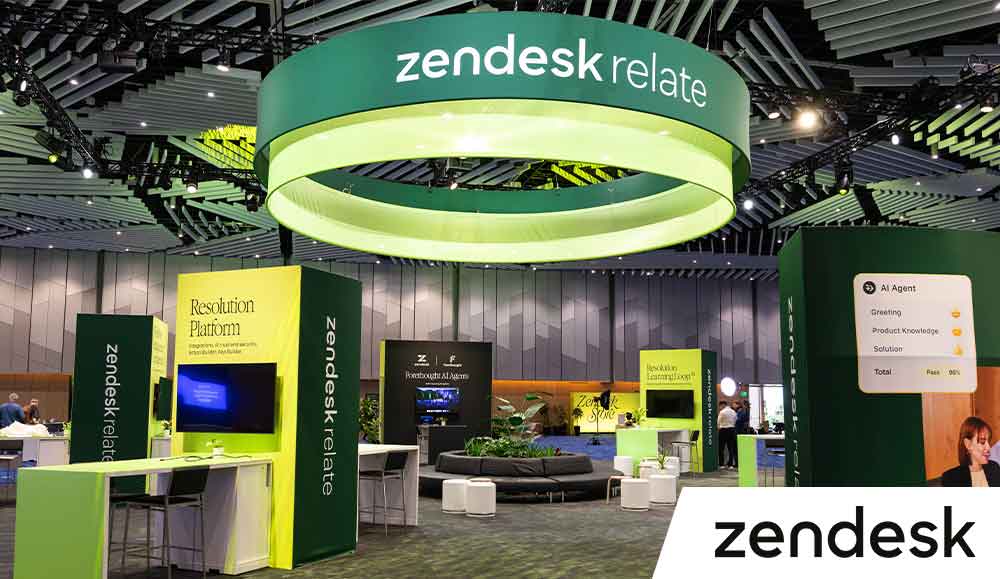
At Zendesk Relate 2026 in Denver, Colorado, a definitive theme resonated across every keynote and session: CX has officially entered its learning era when it comes to agentic AI.
As Adrian McDermott, CTO at Zendesk, put it: “The contact centre is really having a moment. It’s having a moment of modernization.”
Let’s recap the summit through its greatest takeaways, and discover how your contact centre can enter its crucial AI learning stage this year.
Watch the video below to hear what was discussed when Xander Freeman caught up with Adrian McDermott, CTO at Zendesk, at Zendesk Relate:
For many contact centres, the pressure to “do something with AI” is here, long before the playbook has even been fully written.
This is now being described as entering the experimental “learning phase” of agentic AI. We are in uncharted, lawless land for the most part – a never-before-experienced technological arms race.
Leaders are being asked to modernize, improve, reduce and protect now in a way they have never before, and all at once.
The ambition is huge – so learning what’s already working and what isn’t, where the trust and governance risks are, and how to prevent your company’s AI from going from corporate golden child to simply another layer of customer frustration, is so important.
Few organizations have all the answers right now. While some are already seeing impressive levels of automation, others are still struggling at the starting line: cleaning up basic knowledge articles, understanding governance requirements, deciding which processes to automate first and, just as importantly, which processes are safe to automate in the first place.
The upside to all of this, however, is that the competitive field is still currently wide open. Those still at the start may actually benefit massively from watching where early adopters succeed, where they struggle, and which foundations actually matter before committing too heavily to the wrong approach.
The companies that do best in this phase will not be the ones that automate the most or the fastest. They will be the ones that learn the fastest, govern carefully and design their agentic AI around real experiences and best practices as they come.
One of the strongest lessons from Relate was that ethical design is now incredibly important, especially when automation is being used to shape customer outcomes, workflows and trust – and as the AI legislation becomes more defined.
Regulatory pressure is also becoming harder to treat in broad regional terms. In the US, privacy law remains a patchwork of federal, state and sector-specific rules, while frameworks such as the NIST AI Risk Management Framework have encouraged organizations to take a more structured approach to AI risk.
In Europe, the EU AI Act has implemented a shared framework for AI, but businesses will still have to think market by market. Local enforcement priorities, customer expectations and risk appetite can vary significantly between countries, including Germany and the Netherlands.
Zendesk addressed these challenges head-on. Instead of asking their CX leaders to rely only on broad claims about “responsible AI”, they can point to published trust materials they have created around matters of recognized security, privacy and their AI standards.
Sheila McGee-Smith, President & Principal Analyst at McGee-Smith Analytics, LLC, discussed this briefly with Xander Freeman, saying it was “very refreshing” to see Zendesk put its chief legal counsel on stage to talk about trust and governance from the beginning.
In a market full of uncharted territory regarding AI, that kind of emphasis on ensuring standards and practices from Zendesk is what makes AI adoption credible and increases trust with your customers, because it shows you take them seriously.
The companies that scale AI successfully will be the ones that can prove their systems are secure, explainable, governed and safe enough for real customer environments.
The next big lesson from Relate is that AI is only as strong as the knowledge behind it.
It can only be useful if it can draw from information that’s accurate, current and structured enough to act on.
If the knowledge base is strong, AI can become genuinely useful: deflecting simple queries, assisting agents, highlighting gaps and improving consistency across channels.
If it isn’t, then automation doesn’t solve service problems – it simply reproduces them faster. Your AI could answer poorly, escalate unnecessarily, or create new clean-up-and-repair work for agents.
Many contact centres are not starting from a clean knowledge environment, but they may have to organize their sources before implementing or launching their agentic systems to avoid these issues.
Typically that would be frustrating and tiresome work, but now Zendesk has created one of the world’s first solutions that speaks directly to this problem.
Zendesk’s ‘Knowledge Copilot Early Access Programme’ debuted this May, and they talked about it at the event – describing it as an admin workspace that centralizes your knowledge and that uses your most recent CX ticket data to recommend improvements.
Your copilot can then help to identify where content is outdated, missing or simply failing to answer the questions customers and agents are really asking.
What’s clear is that the future of AI in CX is not just about better operations, but also about better models to assist leaders with this exact thing, such as Knowledge Copilot.
Another major takeaway from Relate was Zendesk’s sharper contact centre positioning.
McGee-Smith saw the event as a defining moment for Zendesk’s contact centre ambitions. In her view, Relate showed that Zendesk is now “a contact centre player” and “in the game”, a logical next step after the company’s acquisitions and growing investment in voice.
One of the biggest takeaways for her was that Zendesk is now going to sell standalone contact centres. That matters for the channel because partners with customers on legacy voice systems may now have a clearer reason to bring Zendesk into the conversation.
Chris Marron, an independent communications-industry analyst and advisor, made a similar point from a product strategy perspective.
Zendesk, he said, was once seen mainly as a ticketing platform, but has moved “from ‘that ticketing niche’ to ‘all things customer service’ to ‘that full resolution platform”’.
He also highlighted the LocalMeasure acquisition, noting that it gives Zendesk an Amazon Connect core. His view was that this creates “a very powerful combination” and reflects where the market is heading: towards convergence across contact centre, service, AI, analytics and knowledge.
For organizations hesitant to completely “rip and replace” their existing infrastructure, this modular flexibility is incredibly valuable.
The strongest AI events show how companies and their contact centres are actually using it in inspiring and innovative ways, not just an endless barrage of products.
Zendesk Relate’s agenda highlighted customers from various organizations, including Canva, the International Rescue Committee (IRC), Levi’s, ASOS and Supercell, with sessions focused on their real-world successes with their AI-powered services.
These customer examples always make the AI conversation more useful because they show what real adoption looks like inside real service environments, where these fast-moving brands are deciding things smaller brands will also need to soon, like:
For many CX leaders, those practical stories are often more useful in practice than more abstract and unvalidated predictions about the future.
One of the most encouraging ideas from the interviews was that Zendesk’s AI vision still keeps people close to the centre.
Jonathan Barouch, VP and General Manager of Contact Centre at Zendesk, spoke about “Zendesk on Zendesk”, with the company’s own support team using its tools, increasing automation rates and feeding what it learns back into the product.
He also described Zendesk’s “forward deployed engineer” approach, where technical teams work directly with customers in their own environments to help the technology solve real operational problems.
Together, those examples point to a deeper human-led vision of agentic AI. It is not something most organizations should simply switch on without customer R&D first.
The learning phase requires three things. It needs to be:
Successful AI adoption will depend on how agents use it, how customers respond to it, where it improves service or fails, and how quickly those lessons are fed back into the system.
When Adrian McDermott, Chief Technology Officer at Zendesk, was interviewed, he reiterated a similar sentiment: that contact centre teams should not still be juggling “multiple keyboards and bits of paper” in 2026.
The point was not simply that AI can speed things up, but it should also make the work itself less fragmented, less manual and less frustrating for the agents handling customer conversations every day.
The future of AI in CX will be judged by whether or not:
The clearest message from Zendesk Relate 2026 is that customer service is entering a new phase of seriousness, and so for most companies, AI is no longer just a side experiment.
All of these core components – knowledge, governance, voice, automation, agent experience and customer trust – are converging into one larger conversation, and in this emerging learning phase there’s still time for CX leaders in the space to start asking better questions.
If Relate showed us anything, it is that the organizations that win the next phase of CX will be those that treat AI as a discipline (rather than a cheat code). Something to learn, govern, refine and use in service of creating a better service.
Author: Xander Freeman
Reviewed by: Megan Jones

The Latest Customer Contact Research, Reports and White Papers straight to your inbox!
Get the latest insights from Call Centre Helper by signing up for our email content.
Close


26th October 2026
27th October 2026
The Intelligence Gap Shaping the Future of Customer Automation – Webinar