The Largest Online Community for Contact Centre Professionals


The Largest Online Community for Contact Centre Professionals
 Close
Close



Published On: 17th Jan 2022 08:00 - Modified: 8th Jan 2026
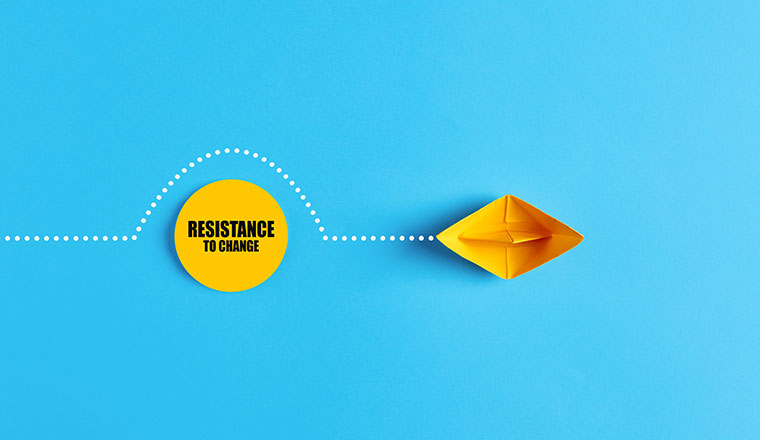
Customer service needs to change, but all too often it gets bogged down with people bringing in resistance to new ideas. In this talking point, Peter Massey agues that the key to change is hearing other people’s points of view.
I’ve spoken at, facilitated and chaired many business conferences. Along the way I’ve heard many an eloquent explanation of why a person or company succeeded brilliantly or failed catastrophically.
If there’s one thing I’ve learned, it’s that the people and companies who know how to listen do very much better than those that don’t. So, I started a quest to find out why not listening to other people’s ideas, i.e. resistance, is so common.
Surely evolution would favour those who listen to the best ideas and use them rather than stubbornly ploughing their own furrow, regardless of success?
Some stories and experiences along the way gave insights, but not the answer.
Why Native Americans pass a peace pipe: only the one holding it can speak, the rest respect them and listen.
How my Japanese colleague would earn the most respect and be listened to by being silent longer than anyone else in a meeting.
How asking good questions changes people’s minds better than providing good answers.
How in every great meeting the quality of the listening by the leader is striking.
I finally got to some sort of answer to why we resist other people’s ideas when I read Daniel Kahneman’s “Thinking, Fast and Slow”. Resistance comes from the way we process information. Our brains have learned patterns and mental models we recognize instantly.
The ancient, faster parts of our brains want to jump to conclusions rapidly in order to keep us safe. The slower, more evolved logical parts of our brains find it hard to compete. So, we accept more readily what matches our existing mental models, we reject what doesn’t match our mental models. Resistance. So, to change our minds we have to consciously challenge ourselves.
A technique I was taught is listening for understanding versus listening for judgement.
Decide to listen, not to argue (yet). Resist the voice in your head formulating answers part way through the speaker’s sentences. Ask questions which build your understanding of the situation or point of view. Summarize what you’ve heard. Then tell them why they’re wrong!
No seriously, consider overtly what you’ve learned and compare it to your mental model of the situation. Confirm what you learned. The BBC Radio 4 programme “Across the Red Line” illustrates this kind of technique fabulously if you want to know more.
To find out how to develop listening skills in your contact centre, read our article: Customer Service Skills: How to Improve Empathy, Active Listening and Knowledge
Techniques to divide people are rife in our daily lives. They are used to effect. Social media and 24-hour news media give voice to and amplify the arguments. And create wider, deeper divides than might once have been the case.
Hamilton vs. Verstappen fans can only see one person crashing into the other. Leavers vs. Remainers might only see one side of a border. Red vs. blue politics are deaf to both being right on a subject. Diversity: ‘Like us’ vs. ‘not like us’ creates false stories. Looking after the well-being of students and staff vs. being a snowflake generation who value different things from previous generations.

Next time you get into one of these situations take time to suspend judgement and listen for understanding. See what you learn. Only then start speaking.
“Two ears, one mouth” is an old saying in sales training. It behoves us all to use two ears if we want to move some of the stubborn debates and inequalities around us.
Written by: Peter Massey at Budd
Read the following articles next to find out how to manage attitudes towards change and inspire your workforce:

Peter Massey, MD & co-founder at Budd UK Ltd.
Peter’s passion is “How do we stop doing dumb things to our customers and people?” The specific consulting methods Budd has used over the past 20 years are encapsulated in his colleagues’ books “The Best Service Is No Service” and its 2022 update “The Frictionless Organization”. Budd is happy to provide free guidance and advice on their use.
He co-founded the LimeBridge global alliance of customer experience experts, operating from 8 countries globally. He facilitates the invitation-only UK Chief Customer Officer Forum, now in its 18th year.
Budd’s focus is sharing: knowledge, access to information and experience. Peter’s focus is the practical meeting of AI and human psychology, the future learning from history.
Connect with Peter on LinkedIn
Read more by Peter MasseyReviewed by: Robyn Coppell

The Latest Customer Contact Research, Reports and White Papers straight to your inbox!
Get the latest insights from Call Centre Helper by signing up for our email content.
Close


22nd September 2026
Streamlined Processes and Adaptive Workflows for Superior Results – Webinar
24th September 2026
CX Excellence Masterclass: Explore the Link Between QA and CX