The Largest Online Community for Contact Centre Professionals


The Largest Online Community for Contact Centre Professionals
 Close
Close



Published On: 1st Oct 2026 11:00 - Modified: 30th Sep 2026
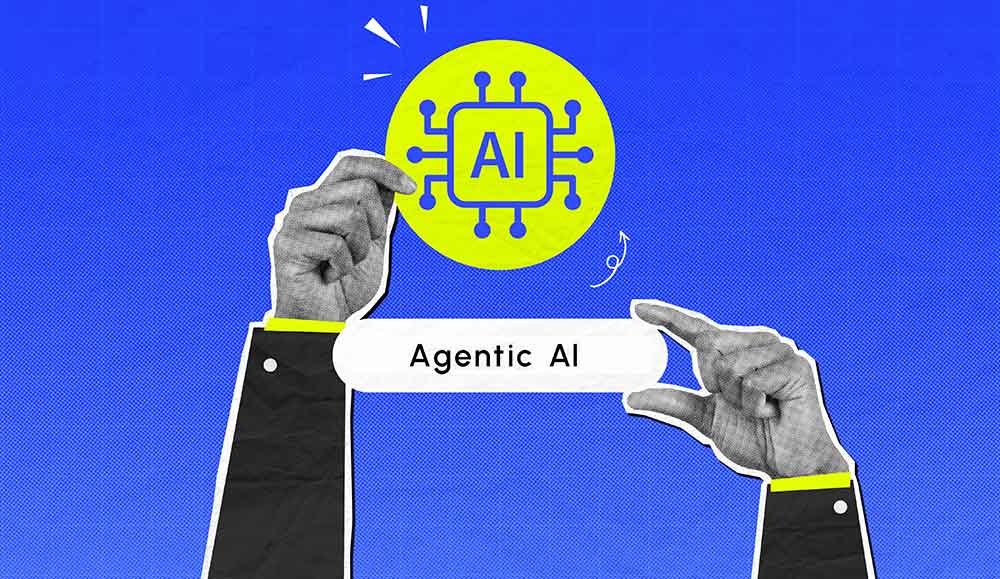
CallMiner covers what agentic AI is, how it works, where it fits in contact center operations, its benefits and risks and how organizations can get ready to adopt it responsibly.
Agentic AI enables contact centre systems to pursue goals, make decisions and complete multi-step tasks across tools such as CRM, knoledge, billing and scheduling platforms, with defined human oversight.
It is the next step beyond AI used primarily for transcription, analytics, self-service, summarization, quality management and agent assistance.
Gartner predicts that by 2029, agentic AI will independently resolve 80% of routine customer service issues without human assistance, reducing operational costs by an average of 30%.
That transition becomes critically important in the contact center, where handling even one customer interaction might involve a CRM, knowledge base, billing platform, scheduling tool and half a dozen other applications.
Today, those systems are most likely being stitched together in real time by a human agent. Agentic AI will take on more of that stitching.
The pressure to adopt AI is already clear. In a recent Gartner survey, 77% of service and support leaders said senior executives were pressing them to deploy AI, while three-quarters reported larger AI budgets than the previous year.
Yet adoption remains early: McKinsey’s 2025 State of AI survey found that although 62% of organizations were experimenting with AI agents, almost two-thirds had not begun scaling AI across the enterprise.
Agentic AI is an approach in which AI systems pursue a defined goal rather than simply respond to a single prompt.
An AI agent applies that capability by interpreting the goal, planning the steps required, retrieving relevant information, using approved tools, making decisions within set parameters, taking action and reviewing the outcome.
That may seem autonomous, and it is. However, autonomous doesn’t mean unsupervised. Just as an organization can delegate decision-making authority to an employee, it can specify precisely how independently an agent can act.
It can define which permissions the agent has, which guardrails it must operate within, which decisions must be approved by a human and when it must escalate to a human. Agentic AI exists on a spectrum of supervised autonomy. It’s not an on/ off switch.
Generative AI creates or transforms content in response to a prompt, such as a summary, draft reply or translated message.
These systems use natural-language prompts to generate text, images, audio and video. Agentic AI may use generative AI models, but it operates as a broader system that plans and takes actions to achieve a defined goal.
The distinction comes into focus with a billing dispute. Generative AI could summarize the dispute for an agent to review.
An AI agent could do more: look up the account, find the billing mistake, know the allowable resolution, apply the credit, update the CRM and even inform the customer, without any human needed for the most routine scenarios.
Conversational AI interacts with a human in conversation, using natural language to understand what someone is asking and replying in natural language.
Agentic AI can operate behind that conversation, orchestrating many tools and systems to do the work requested.
They complement each other well: conversational AI provides the conversation layer that interacts with the customer or agent in natural language, while agentic AI provides the layer that does complex work across systems to fulfill the request.
These terms are conflated frequently, but there is a clear distinction:
A traditional agentic workflow flows through these stages:
Every stage depends on integration. Agentic AI must connect to the CRM, CCaaS platform, knowledge base, workforce management, payment and ticketing systems, and other systems of record used by the contact centre.
These connections allow it to gather context and execute approved actions; without access to a required system, the agent cannot complete or adapt the workflow.
Likewise, that’s why we place so much emphasis on analytics infrastructure prior to automation.
Agentic AI is most valuable in contact centre workflows that require several steps, multiple data sources or a judgment-based decision.
Common applications span the interaction lifecycle, including routing, real-time agent support, case resolution, quality management and post-interaction processing.
Elevate your chatbot platform from answering questions to handling full multi-step requests (changing your plan, approving an eligible refund, rescheduling an appointment, updating account info) and automatically escalating exceptions outside of their control.
Research an open case, retrieve data from multiple sources, suggest or take the next action and update or close the case file without human intervention at each step.
Assess intent, history, sentiment, issue complexity, available resources and more to route a customer to the right agent, queue, channel or automated process. Re-route that decision if the situation changes during the interaction.
Observe an active conversation, identify needs as they develop, automatically surface relevant knowledge, suggest a next-best action and autonomously perform approved background tasks while the agent works.
Summarize conversations, apply disposition labels, update CRM data, generate follow-up tasks and send approved emails. Initiate follow-up workflows without agents having to manually enter data.
Assess conversations at scale instead of relying on manual sampling, flag conversations that require review and automatically escalate high-risk instances to supervisors or compliance teams.
Conversation intelligence and agentic AI converge here: automated quality management relies on first understanding, at scale, what “good” and “risky” look like in your interactions.
Detect when an issue was not resolved or an action was promised, decide what follow-up is appropriate based on the context of the interaction, then trigger the message, task or outreach and escalate if sentiment and/or behavior indicates it’s needed.
Spot common performance gaps using interaction data, recommend focused coaching, assign specific training interactions and monitor if performance changes for the better.
Done right, agentic AI doesn’t merely automate person-to-machine work. It allows you to do things that were previously impossible in an interaction.
As AI agents become more capable of reasoning, planning and self-checking, they can take on increasingly complex tasks while handling repetitive work quickly and at scale.
The benefits outlined below include everything from tangible, operational metrics such as cost and time-to-resolution to less tangible benefits such as consistency and always-available support
Greater automation of complex workflows. Agentic AI allows you to automate beyond simple rules-based tasks and extend into processes that previously required jumping between applications.
Automating repetitive administrative tasks and reducing unnecessary handoffs allows agents to focus on interactions that require human judgment, empathy, negotiation or expertise.
Reduce transfers, hold time and delays caused by switching between screens, plus the potential to improve first-contact resolution rates by giving AI access to the tools and information needed to solve the problem, not just describe it.
Applying your policies and processes the same way every time reduces manual variation.
Agents will have more time spent directly helping customers rather than switching screens or doing after-call work.
Fully automate more customer requests outside of staffed hours, rather than simply acknowledging the query with a self-service system.
The autonomy that makes agentic AI valuable also increases the consequences of failure. When a system can act rather than only respond, inaccurate outputs can lead directly to operational, financial or customer harm.
Guidance from OWASP and the Cloud Security Alliance identifies risks specific to autonomous systems, including memory poisoning, tool misuse, privilege compromise and manipulation of agent goals. Contact centers should assess these scenarios before granting an AI agent authority to act.
An incorrect AI-generated answer can cause harm, but an incorrect autonomous action can have more immediate consequences.
An improper refund, unauthorized account change or damaging customer communication can create operational and financial impact beyond that of an inaccurate chatbot response.
Agents need access to sensitive customer information and business data to perform their duties. Least-privilege access and strict control around what systems and records an agent can access will be table stakes, not optional hardening.
Contact centers operate in environments subject to industry regulations, privacy laws, call recording laws, payment card requirements, consumer protection regulations, etc.
Actions taken autonomously will be subject to those requirements (or organizations will be held to them), so those use cases need the same (or greater) level of oversight and compliance as their human counterparts, not less.
Organizations will need to know why an AI agent made the decision it did. As AI systems become more autonomous, explainability and accountability become more complicated because it can be harder to determine who is responsible for an autonomous system’s decisions and outcomes.
What information did it use? Was it drawing from approved enterprise systems or other questionable sources? Audit trails will be required for the decisions and actions that matter.
AI, particularly LLM-based agents, will still make mistakes and provide incorrect information. Responsible AI research continues to focus on improving how factuality, truthfulness and hallucinations are evaluated, with newer benchmarks emerging to measure these problems.
While perhaps impossible to eliminate entirely, organizations can mitigate this risk by extensively grounding systems in enterprise-approved information, with clearly defined rules about which information sources can and cannot be used.
Autonomous agents are powerful, but that doesn’t mean every decision should be automated. Organizations must decide which decisions can be made entirely autonomously, which require human approval, and which should never be automated.
Conversation intelligence gives agentic systems evidence about what is happening in customer interactions, including intent, sentiment, frustration, compliance signals, agent actions and resolution outcomes.
This evidence helps organizations decide what to automate, define appropriate guardrails and evaluate whether automated actions improve customer and business outcomes.
It also naturally forms a feedback loop worth architecting around: review conversations, surface needs and patterns, enable or trigger agentic actions, track results, then report on and feed those results back into improving the overall process.
Your AI agent will only be as intelligent as the conversations fueling it. Agents built on assumptions optimize for efficiency (i.e., cost savings), while agents built on real interaction data can optimize for results.
Conversation analytics also lets organizations validate after the fact how their agents are performing. Are your AI agents really driving the customer and business outcomes they were designed to improve, or are they simply answering more tickets?
When we say conversation intelligence is driving agents, we mean conversation intelligence is the measurement and insights layer that informs and validates actions taken by agents.
It tells you what to automate, whether your automation is successful and where it’s failing. It’s not to say the analytics platform itself is automatically triggering every downstream workflow.
Implementing agentic AI successfully in a contact centre is less about technology and more about sequencing: which tasks you automate first, how much authority you delegate and how closely you monitor the results.
The steps below will guide you from a narrow, tightly controlled starting point to a confidently scalable program.
Target high-volume workflows that have easily identifiable goals and success metrics. Avoid trying out AI in areas with open-ended, undefined autonomy.
Clarify whether the AI will suggest certain actions, perform certain actions upon approval, or autonomously perform actions and under what circumstances those actions escalate to a human.
Determine which systems are actually used in each workflow and connect the AI to information that is reliable, up-to-date and the AI is permitted to access.
Determine permissions, actions that are not allowed, approvals, audit logging, escalation processes, and have security, compliance, legal, operations and CX teams represented.
For LLM-based conversational systems, programmable guardrails can also be used to control outputs, restrict certain topics and enforce predefined dialogue paths.
This is a great starting checklist from CallMiner on AI agent automation governance, guardrails, and risk management.
Organizations can also use ISO/IEC 42001 as a framework to establish an AI management system and manage AI-related risks and opportunities across the organization.
Retain human escalation for sensitive, unclear, high-value, and high-risk decisions. Ensure escalation is seamless when an AI agent encounters a situation outside of its scope or confidence levels.
Measure task fulfillment and customer satisfaction. Regular evaluations of AI agents can help teams identify behavioral changes and failures before they affect customers, while ongoing production monitoring shows how agents perform in real-world interactions.
Use conversation analytics to identify unexpected patterns, negative customer sentiment, compliance issues, and business process breakdowns in real time instead of in hindsight.
Organizations that have already completed a first deployment learn a key lesson: validate what works in human conversations before automating.
Because if it isn’t working when handled by a human, an AI agent will reliably automate that same painful pattern (whether good or bad). Learn more about our findings from hundreds of enterprise AI deployments.
Gartner predicts that by 2029, agentic AI will automatically resolve 80% of routine customer service requests without human interaction, reducing associated handling costs by an average of 30%.
Reaching that level of autonomy will require contact centers to move beyond systems that only assist or recommend toward systems that can coordinate and complete approved tasks.
How will organizations measure up against those expectations? By deploying multiple agents that specialize in different tasks across a single customer service workflow, rather than one agent trying to fulfill all responsibilities.
As that transition occurs, we can expect humans to take on more of the exception work, the sensitive conversations, the complex problem-solving and the relationship-building that computers can’t do.
It also means contact center leaders will require visibility into both human and AI-driven conversations flowing through their organizations.
Far from making monitoring and conversation intelligence obsolete, autonomous systems create a greater need for them. The more your system can do by itself, the more you need to understand what it did.
Agentic AI refers to AI that acts on behalf of someone or something.
This can include systems that use AI models to retrieve information, plan actions, leverage tools and applications, complete an action and iterate based on results in order to accomplish a goal (such as resolving a billing dispute).
This is typically done with the permissions and guardrails an organization provides.
Generative AI typically refers to AI’s ability to generate or transform content based on a prompt. Agentic AI may leverage generative AI models as part of a system that completes a goal and takes action across systems.
Autonomous case resolution, end-to-end multi-step service requests, intelligent routing, real-time agent assistance, automated post-interaction workflows and AI-driven quality management are some of the most common use cases today.
It will handle a significant portion of common and well-defined requests. However, organizations will always need agents to handle exceptions, ambiguities, high-risk decisions, and scenarios that rely on empathy or negotiation.
Most implementations strive to establish which decisions remain with a human, rather than remove humans from the decision-making process.
The main risks of agentic AI in customer service include incorrect autonomous actions, excessive access to sensitive data, privacy and security failures, regulatory non-compliance, limited explainability, hallucinations and flawed reasoning.
Contact centers can reduce these risks by limiting permissions, defining human approval and escalation points, grounding agents in approved information and maintaining detailed audit trails.
Contact centers can monitor agentic AI by continuously analyzing customer interactions and maintaining audit logs of each action, the information used and the reason for the decision. Teams should also define escalation paths and regularly review efficiency, customer experience, compliance and risk KPIs.
Measure the ROI of agentic AI by comparing operational outcomes such as first-contact resolution, average handle time and cost per contact with experience and risk outcomes such as customer satisfaction, compliance performance and the rate of errors or corrections in AI-driven activities.
This balanced view shows whether efficiency gains are creating sustainable customer and business value.
This post has been re-published by kind permission of CallMiner - view the original article.
CallMiner, the leader in CX automation, combines AI agents and human expertise to optimise interactions, cut costs, and boost engagement. Advanced analytics transform conversations into intelligence that drives improvements and automation for global brands.
Find out more about CallMinerReviewed by: Robyn Coppell

The Latest Customer Contact Research, Reports and White Papers straight to your inbox!
Get the latest insights from Call Centre Helper by signing up for our email content.
Close



29th September 2026
30th September 2026


