
The Largest Online Community for Contact Centre Professionals


The Largest Online Community for Contact Centre Professionals
 Close
Close



Published On: 30th Sep 2026 08:00 - Modified: 7th Oct 2026
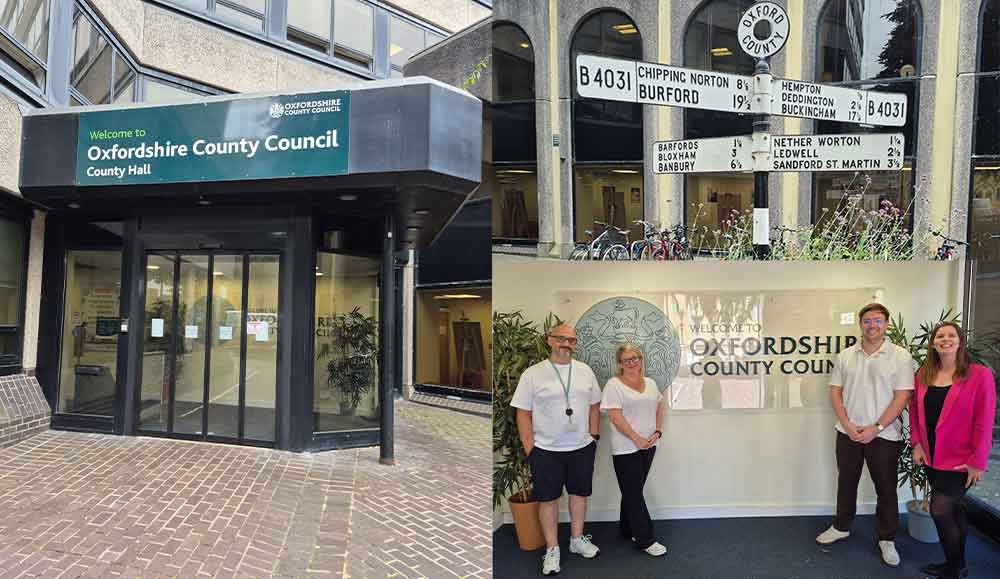
We recently visited Oxfordshire County Council to find out what happens behind the scenes in their contact centre – and what it really took for Tom Parsons, Richard Merritt, Clare Martin, and the team to win a Zoom CX Excellence Award 2025 for transforming citizen services.
From using WhatsApp and SMS to make life easier for customers, to rethinking quality assurance and recruitment, here are 10 great ideas we heard during our visit.
Could you save your advisors and customers time by making better use of SMS and WhatsApp?
Oxfordshire County Council has introduced SMS as an outbound channel, allowing advisors to send information to customers while they are still on the call.
This helps to avoid those familiar “Have you got a pen?” moments, where an advisor has to read out information for a customer to write down.
The team can also start a WhatsApp conversation during a call, allowing customers to send through photographs or other documents.
For example, if a customer has a question about their photograph for a bus pass application, they can simply send it via WhatsApp while still speaking to the advisor.
The advisor can then confirm whether the image is suitable before the application is submitted, replacing the lengthier process of asking customers to email a photograph, waiting for it to arrive, and then getting back in touch if the image isn’t suitable.
As team leaders know all too well, monthly 1:1s can take up a considerable amount of time. To help make the process more manageable, their team leaders have mixed up the format, as follows:
This approach ultimately gives team leaders more time back in their week, while still ensuring advisors get the regular support they need across the year.
| Transport for Oxfordshire County Council Fact File | |
|---|---|
| Call Volumes | |
| Annual Inbound Calls | 242,614 |
| Annual Outbound Calls | 92,029 |
| Annual Emails | c200,000 |
| Other Channels | Social Media, Web Forms, Web Portals |
| Contact Centre Size | |
| Number of Seats | 91 |
| Number of Full-Time Agents | 61 |
| Technology | |
| ACD | Zoom |
| Headsets | Jabra |
| WFM | Zoom |
| Wallboards | |
| Call Recording | Zoom |
| Call Scoring | Zoom |
| Intranet | Oak Engage |
| Any other tech | Various back office systems |
Introducing new technology can be challenging, particularly when teams are all learning how to use it at the same time, as well as adapting to new ways of working “on the job”.
At Oxfordshire County Council, they strive to create a supportive environment where people can experiment, learn together, and work things out as they go.

“When rolling out a new system or feature, I really tune into listening to my team, taking a trial-and-error approach, and figuring things out together – all with a positive mindset of “don’t worry, this is new, we’ll find our way”.
It’s just about finding a new way of working and being very supportive of each other during the learning process.” – Karen Hughes, Team Leader, Customer Resolution Team.
Could AI completely change the way you approach quality assurance?
As Oxfordshire County Council have found – using Zoom Quality Management to automatically transcribe calls and assess advisor interactions against automated scorecards – this can help save significant amounts of time for QA leads.
For example, it makes it easier to identify examples of best practice and areas where interactions could be improved – instead of spending hours manually listening to calls.
The AI-powered tool also enables QA leads to ask questions about individual calls – such as what feedback should be given to an advisor – and generate a report with recommendations.
Not only this, but the technology can also highlight trending topics and mention rates. For example, if “vehicle tax” is being mentioned more frequently, the team can investigate why and better understand the root cause.
When introducing new technology, it’s important to think honestly about whether you have the internal resources and expertise needed to make the most of it.
After adopting Zoom, the team recognized early on that it didn’t have all the resources and expertise required in-house to make their workflows come to life as quickly as they’d have liked, so they partnered with Acceleraate to help speed things up.
Being realistic about what their team could deliver and bringing in specialist expertise really helped them to stay on track with their roadmap.
The Council has also taken a different approach to measuring customer satisfaction rates and no longer tracks C-SAT as a core metric.
Why? The team found that traditional C-SAT was based on fewer than 2% of survey completions, making it difficult to build a reliable picture of what was happening.
Instead, the team uses AI-powered customer sentiment and engagement scores to help understand how customers feel about their interactions with the council – with a focus very much on gaining a holistic understanding of the service being delivered.
Oxfordshire County Council recently took the plunge to introduce a voice AI assistant that uses a language model designed to welcome customers, identify what they are asking for, and help route them to the appropriate team – in place of their traditional IVR.
And the results were immediate! On day one, calls to the switchboard dropped by 55%, with that figure now closer to 60%.
This has freed up advisors who previously handled switchboard calls (and redirected confused customers) to redirect their time to supporting more specialist queries from others.
Recruiting for specialist customer service roles can be challenging – particularly when a role involves making potentially life-changing decisions, such as Oxfordshire County Council’s social care team.
On a day-to-day basis this team handles complex social care issues – including safeguarding issues and conversations around suicide.
As a result, these roles typically sit around two pay grades higher than many other contact centre roles. However, this has a negative impact on recruitment, as they’ve found the higher salary typically appeals to candidates who are primarily interested in the pay – rather than the reality of the role.
To help identify the right candidates, therefore, the team has developed a 3-pronged interview process:
Candidates then need to successfully complete all 3 stages before they are offered the role. Typically, around 90% of applicants are screened out during the first stage, with the ultimate aim to create a robust recruitment process that identifies people who are genuinely suited to the role – before too much time is wasted on the wrong candidates.
In other areas of recruitment, the Council focuses on finding people with the right attitude and personality to provide great customer service – not necessarily those with the most impressive CVs.
They’ve even taken this one step further by engaging with Jobcentre Plus and DWP’s Connect to Work initiatives to help people with disabilities find employment.
By collaborating to identify ways to remove barriers that might otherwise prevent them from working, they’ve opened up contact centre careers to people who may not otherwise have considered them.
For example, Tom has joined the team this year after struggling to find in-office work due to his disabilities.
Thanks to funded transport to work, a more comfortable seat to help with posture, and putting in place a zero-hours contract to do the hours that he is able to do each week, he has enjoyed being in post since February 2026.
Finally, continuous improvement is a major part of the culture at Oxfordshire County Council, and they hold quarterly briefings for the whole team, covering recent achievements, successes, congratulations, and the roadmap ahead.
These briefings are also seen as an opportunity to listen, and the frontline is actively encouraged to identify issues and challenge leaders when they ask “Can you tell me a problem we need to fix?”. After all, if you want your frontline to help improve the service, you need to give them the space and confidence to tell you what needs fixing!
With huge thanks to the following members of the Oxfordshire County Council team for making us feel so welcome on our visit and sharing so many fantastic ideas:
For more best practices and fun tips from other contact centres, read these articles next:

Megan Jones, Editor, Call Centre Helper
Megan interviews inspiring people across the contact centre industry to capture these amazing voices and turn them into best practice articles – covering all elements of what it takes to deliver truly outstanding employee and customer experiences.
Connect with Megan on LinkedIn
Read more by Megan JonesReviewed by: Jo Robinson


The Latest Customer Contact Research, Reports and White Papers straight to your inbox!
Get the latest insights from Call Centre Helper by signing up for our email content.
Close


14th October 2026
18th October 2026


