The Largest Online Community for Contact Centre Professionals


The Largest Online Community for Contact Centre Professionals
 Close
Close


Published On: 2nd Sep 2026 08:00
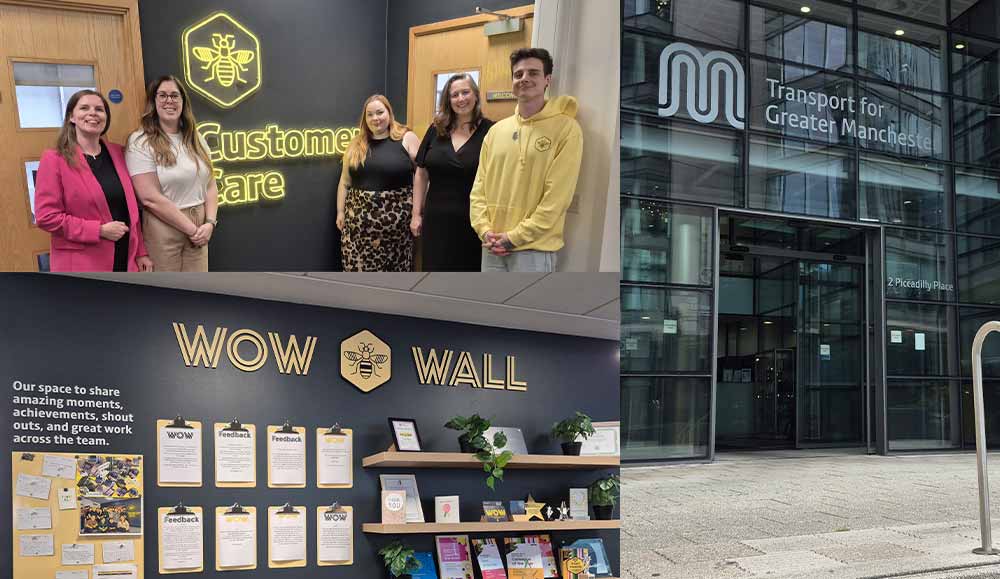
We recently visited Transport for Greater Manchester’s Customer Care team at their Head Office in the UK to find out how Lucie Child – Customer Director – and her team have taken a creative approach to changing up their QA programme, championed positive attrition, built stronger inter-departmental relationships, and more!
If you want to change up your QA process, why not introduce some peer-led QA sessions? The idea is to pair officers up once a month to listen to and review one another’s calls, to provide peer-led feedback to help them learn from one another.

“When officers hear some of their colleagues’ calls, they hear things that they wouldn’t have heard before and are likely to pick up some tips on how other people handle the same queries.
It is also an opportunity for people to have a go at doing some QA themselves from a personal development perspective.” – Kirsty Green, Interim Customer Operations Manager
Transport for Greater Manchester (TfGM) are proud of their high internal attrition rate and see a lot of positive attrition from the Customer Care team into other areas of the organization.
But this doesn’t happen “just like magic”; a lot of time is invested in making sure people understand and see the breadth of opportunity open to them. And this goes beyond the development opportunities within their core role and the scope of their own team.

“It’s part of our culture to be social and collaborative with other departments. For example, our officers are offered “power hours” so they see what other people do and what they might be interested in.
We also take groups of officers to do drop-in sessions with other departments, as well as offer wider development opportunities and apprenticeships across the organization.” – Katie Senior, Customer Contact Centre Supervisor
When do your new starters first experience home-working? Transport for Greater Manchester makes sure it’s part of their induction programme to truly welcome them into their hybrid model.
In practice, this means that every new recruit starts off with 3 weeks in the office, followed by weeks 4 and 5 at home (getting familiar with the support that’s in place), and then week 6 back in the office to consolidate their learning. This approach gives them an early opportunity to see how they feel working both from home and in the office.

“When we looked at what helps new starters succeed in customer care, we realized that building relationships with colleagues, gaining confidence, and feeling a sense of belonging are all just as important as learning the technical aspects of the role. Starting a new job can feel overwhelming, particularly in a fast-paced customer environment when you are learning new systems, processes, and ways of working – all at once.
So, it’s really important to spend time together in the office to start with, but we are also keen that through the onboarding process our new starters get the opportunity to work from home with a really strong support system in place – so they test out what it is like to work in a hybrid model during their journey to full competence.
For us, it’s all about finding the right balance between flexibility and connection, ensuring every new starter has the best possible start to their career with us and feels supported to deliver great outcomes for our customers.” – Lucie Child, Customer Director
| Transport for Greater Manchester Fact File | |
|---|---|
| Call Volumes | |
| Annual Inbound Calls | 600,000 |
| Annual Outbound Calls | less than 500 |
| Annual Emails | 156,000 |
| Other Channels | 20,800 (chat) |
| Contact Centre Size | |
| Number of Seats | 50 |
| Number of Full-Time Agents | 110 |
| Technology | |
| ACD | Cisco Finesse |
| CRM | Dynamics |
| Headsets | Jabra |
| WFM | Calabrio |
| Wallboards |
Cisco Supervisor and TM view only and online Not presented in the office, just online |
| Call Recording | Redbox |
| Call Scoring | Manually |
| Scripting | Word documents |
| Intranet | SharePoint |
| Any other tech | In built and external line of business systems. |
Don’t let your induction process go stale! The Transport for Greater Manchester team makes a conscious effort to gather feedback on their induction process to continuously shape it, speaking to new starters as well as longer-serving members of the team to see how it could be better.
For example, this approach helped the team see the limitations of their initial 2-week programme that’s since been expanded to 6 weeks. It’s also helped them to learn which questions come up the most for new starters once they hit the floor, so they’ve been able to address any blind spots in the programme too.
From a resource planning perspective, it can be tricky to factor in last minute time-off requests for doctor’s appointments, but a little flexibility and creative thinking can go a long way in making sure this doesn’t eat into an officer’s holiday allowance or sick leave.
Instead, Transport for Greater Manchester offer their officers the opportunity to work a split-shift at short notice, so they can work around their appointment – without using up annual leave or disrupting service levels across the whole day.
They also offer an additional 90-minute window as standard for any follow-up appointments to make it hassle-free all round for officers to attend any appointments as and when they need to.
Have you tried creating digital profile cards for everyone on your contact centre floor? (Think professional Pokémon style cards that sit behind each person’s contact details on Teams!)
Using a template, these can include a brief overview of what their role involves as well as interests and hobbies, such as baking, football, or going to the cinema.
This can really help colleagues to have a better idea of who they are about to join a call with, as well as making it easier to do icebreakers, chat about common interests, and build rapport.

Another way to try and strengthen cross-team relationships is with a “Brewlette” – essentially a video call with 4–5 randomly assigned people across the organization to come together and chat.
This is where the digital profile cards can really come into their own, but it can still help to include some useful prompts or conversation starters to help the session go more smoothly for all involved.
One way to help build deeper rapport is to try and reconnect repeat customers with the same team of call handlers each time.
For example, through their Ring & Ride service, quite often the TfGM officers will speak to the same regular customers who they have supported for several years.
This helps to give a really personal experience – with the officers often remembering things like family member names, or the fact they always like to book a journey to bingo on a Thursday.
In addition, all the officers are dementia trained, so they can identify the signs indicating that additional support may be needed.
There are always lots of good excuses to play games and give away prizes in a contact centre. Of course, the usual chocolates, vouchers, and treats always go down well, but Transport for Greater Manchester have also found another prize that goes down well with their officers – the opportunity to win an extra hour of annual leave.

Take bingo to the next level by encouraging officers to walk around and talk to each other as a team-building exercise – off the phones, of course.
It’s very simple to play too! Rather than putting numbers or postcodes onto a bingo card, put things like “someone who is left-handed” or “someone who has been to Spain”, and encourage officers to walk around and find people in the room that match, write that name in the box, and score the game that way instead.
Note, with any games, it’s worth keeping in mind that you can’t ever please everyone at the same time, so if you change it up regularly you have a better chance of keeping morale that bit higher across the year.
Don’t just expect individuals to build their own networks and navigate who is best to reach out to for certain information.
Instead, invest time in building up a web of contacts for everyone to refer to – especially across different departments and external partners, as this really helps to save time.
Of course, it’s equally important to make sure someone is responsible for keeping it updated when people change jobs or take over new responsibilities.
Keep training front of mind in your team huddles by routinely asking questions about your officers’ needs. These sorts of questions allow people to get quick top-up answers from their team leader or peers in the moment, as well as identifying opportunities for a more formal top-up training session.
Maintaining such an open culture about training and feedback helps to ensure that people feel confident to request additional information – especially on new things and less common topics.
For Transport for Greater Manchester, this approach has created a positive loop and momentum of openly sharing training gaps and taking steps to close them.
When driving continuous improvement and taking people on that journey with you, keeping officers in the loop of changes is a massive part of the job that should not be brushed to the wayside – even when things aren’t going exactly to plan.

“I always make sure to send out a weekly update on a Friday that puts the spotlight on the changes coming through, alongside key progress updates – including being very transparent about what is happening and when. I even make a point of explaining what hasn’t gone so well.
For example, if a certain project has stalled because someone has been on sick leave, or if there have been unforeseen delays. Clear and transparent communication is key!” – Brad Lavelle Wilde, Head of Customer Care
Give your officers even more of a voice by inviting them to have a speaking spot on a podcast! For example, Caroline Simpson, Group Chief Executive for GMCA, Greater Manchester Fire and Rescue Service (GMFRS) and Transport for Greater Manchester, recently featured a frontline officer on her podcast, giving them a rare but welcome opportunity to broadcast their role to the wider organization, as well as reinforcing the message that they put customer care at the heart of everything they do.

And why not take your feedback surveys one step further by inviting your frontline team to go out in person to talk to your customers as they are experiencing your service?
Of course, this depends on what is practical based on the services you are supporting, but at Transport for Greater Manchester they’ve gone above and beyond to send their teams out on their trams and buses to get in-the-moment customer feedback.
Not only this, but they also create opportunities for their Customer Care team to spend time in Travelshops to share skills and experiences with other frontline customer service colleagues.
With huge thanks to the following members of the Transport for Greater Manchester team for making us feel so welcome on our visit and sharing so many fantastic ideas:
For more best practices and fun tips from other contact centres, read these articles next:

Megan Jones, Editor, Call Centre Helper
Megan interviews inspiring people across the contact centre industry to capture these amazing voices and turn them into best practice articles – covering all elements of what it takes to deliver truly outstanding employee and customer experiences.
Connect with Megan on LinkedIn
Read more by Megan JonesReviewed by: Jo Robinson

The Latest Customer Contact Research, Reports and White Papers straight to your inbox!
Get the latest insights from Call Centre Helper by signing up for our email content.
Close


14th October 2026
14th October 2026
How to Keep Humans in the Loop Without Slowing AutoQA Down – Webinar


